Mikhail Baryshnikov, one year after the death of his friend and collaborator, the director Robert Wilson, is working on completing their last project.
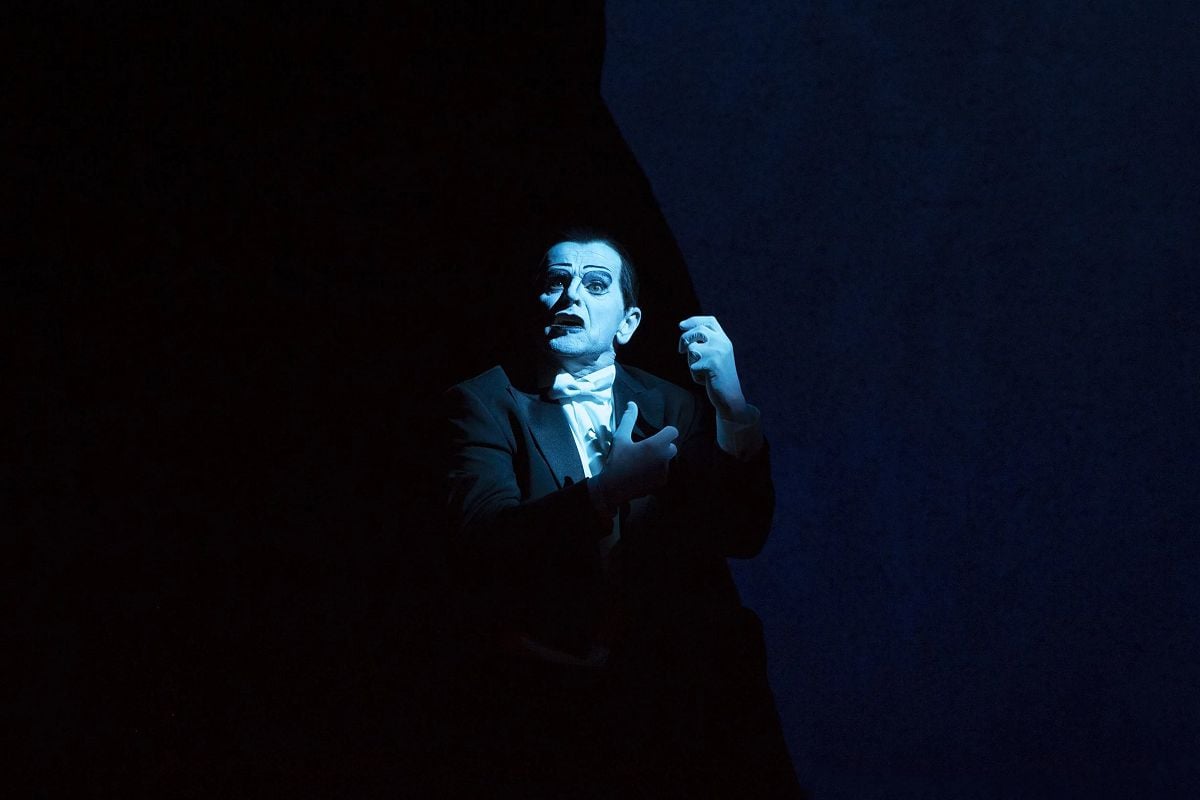
DON Q is an art film co-produced by the Teatro Stabile di Catania in Sicily, Baryshnikov Productions, and the Watermill Centre in New York.
How did the DON Q project come into being?
We began by working on the concept devised by Bob, who, just days before his death, had set out his vision for the production, and I’m allowing myself to be guided and inspired by his perspective and his understanding of the work. I would call it ‘How I Met Don Quixote, as told by Sancho Panza’. It tells the story of how the two discover each other, learn to work together, and get to know one another, facing the ups and downs together.
Don Quixote maintained that the gravest mistake people make is to accept life as it is, rather than conceiving it as it ought to be. This means that he is on a journey aimed at bettering himself, at helping others – those in need, those in difficulty – without ever judging anyone.
So how will it be structured?
It’s a bit early to say exactly what it’s about, but it is based on Cervantes’ novel, transposed into an 18th-century British dramatic style, with the aim of bringing Cervantes’ masterpiece closer to modern English. The adaptation and dramaturgy are by Darryl Pinckney, the writer who devised the adaptations for the productions I’ve done with Bob Wilson: Daniil Kharms’ The Old Woman and Letter to a Man based on Nijinsky’s diaries. Then there are the poems by James Fenton, a great British poet whom I discovered a few years ago and whom I have been following with great interest ever since. I greatly admire his literary work and his poetry.
And why Catania?
When, together with Wilson’s collaborators, Elisabetta di Mambro and Charles Chemin – Bob’s long-time co-director, now director of the Watermill Centre in New York – we decided to continue his work and create an art film. Marco Giorgetti, director of the Teatro Stabile di Catania, who had co-produced several of Wilson’s productions in recent years, immediately offered his support for the project.
In November, we’ll return to Catania to film at the locations we’ve chosen. We were thinking of places that evoke Spain, but this coastline is a world of its own. I’ve already seen some footage shot by our video team – it’s truly splendid and very promising.
Part of it will take place inside an empty theatre, and then there will be the outdoor scenes. It’s a project that demands enormous commitment and extraordinary discipline, and I have a team of exceptional collaborators by my side, including Israel Galván, a great flamenco dancer and a dear friend of mine for many years. We’re working on something that draws on the art of flamenco, a form of expression that I revere.
There will be movement and text, but it isn’t a dance performance about Don Quixote. What emerges will be a sort of monument to what we are capable of building together. What the final result will be, who knows. But we’ll try to do our best [he smiles].
You have originated several projects in Italy.
My connection with Bob and with Italy is incredibly strong. All the projects I’ve worked on with him have taken place here. We staged our previous productions in Spoleto, and now this film – it’s a journey that speaks volumes. It’s a significant responsibility towards both Italy and the audience, and a way of paying a fitting tribute to a great artist like Bob Wilson. It’s become something of a family affair now; every now and then we all get together to join forces before returning in November to start filming the movie.
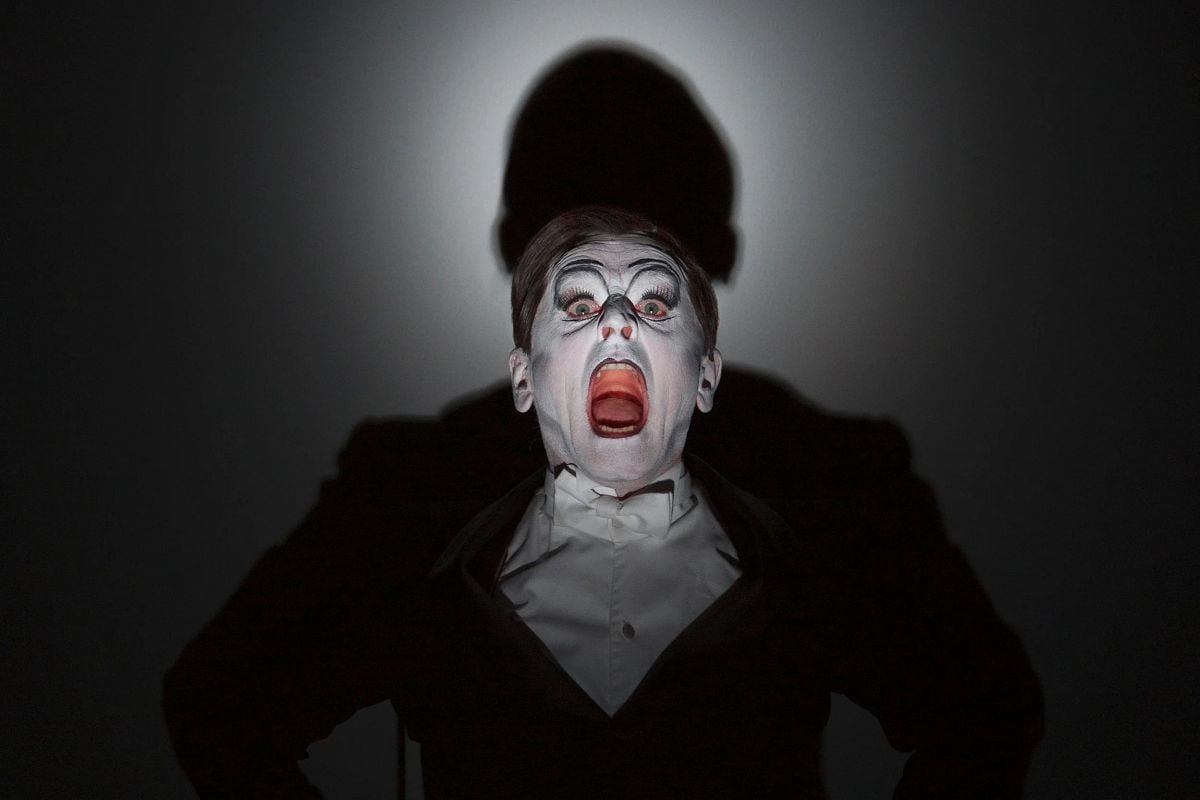
How important was Bob Wilson in your career?
Bob played a vital role in my career; I learnt a great deal from him about life, the theatre and what it means to be an artist. He was a man deeply passionate about art, who devoted his entire life to it – this is perhaps the most striking aspect of a figure like Robert Wilson, an extraordinary man who leaves behind an exceptional legacy. We were friends; we enriched each other’s vision. I truly admired him with all my heart.
So it’s quite a responsibility to finish his project.
There is a certain amount of pressure, of course. Yet every project Bob undertook stemmed from the pressure he first placed on himself, and by the end of his career he had developed a remarkable vision. He rarely made mistakes, and when he did, they were significant, but he was fearless. He was a very courageous man, and that is precisely what one could learn from him.
How is he influencing your work on DON Q?
We try to evoke certain things without imitating them, with sensitivity. You can’t imitate someone like Bob, yet it’s impossible to ignore the lessons we learnt from working with him. We did so many projects together; at first it was just him and me, but I feel that Bob is still with me. Sometimes I wake up in the middle of the night and think: “Wow, time flies.” It’s probably down to my age, but there are so many things that come to a head, on stage, off stage… well, that’s the reality.
What do you remember most about him?
There’s so much, and it’s really far too soon to talk about it all. It’s only been a year since he passed away, and every time we start rehearsals, certain words come to mind, along with some funny moments and others that are very moving and meaningful. The way he left us… He knew he was about to leave us. When the time comes for me, I’ll accept it because that’s how he faced it. At one point he said to me, “You know how ill I am.” I replied, “I know, Bob.” And he just added, “Let’s get to work.” [He wells up]
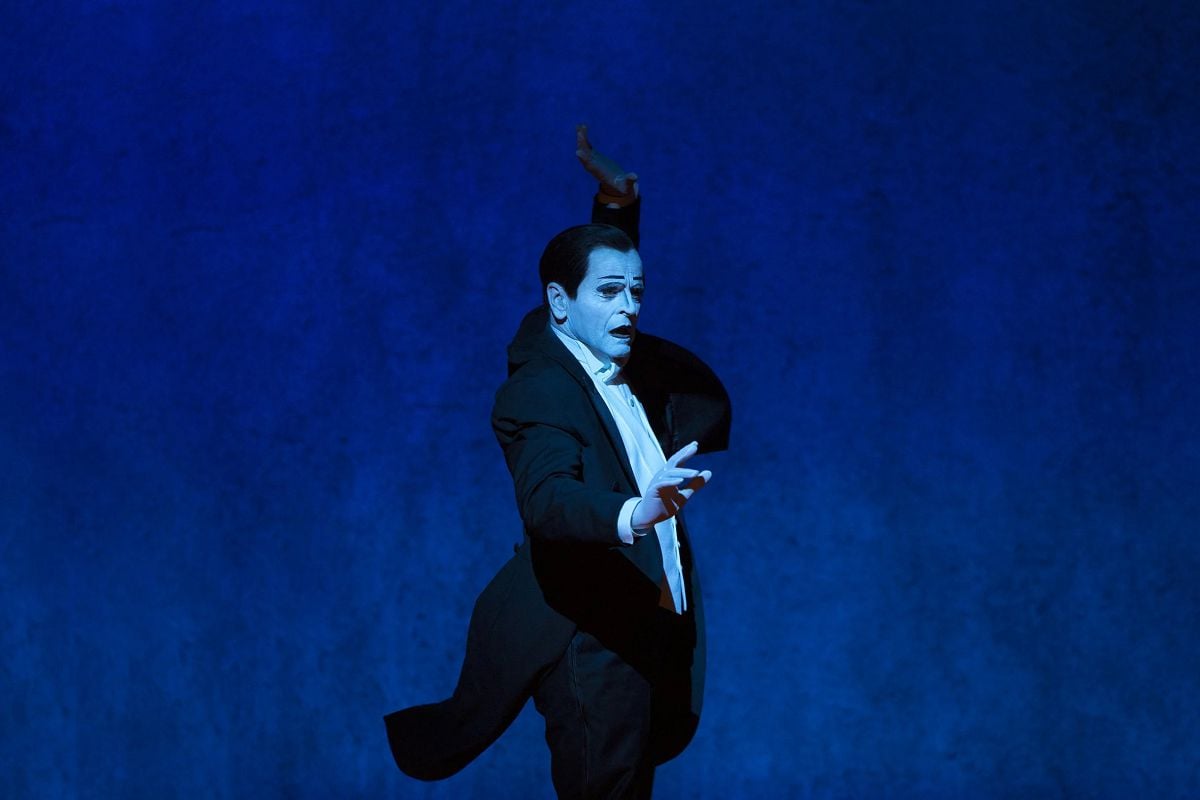
You will be filming DON Q, but in your career you have often been in cinema and TV projects.
For the first film, [The Turning Point, 1977] I was friends with some of the actors involved in the project and was contacted, even though there wasn’t actually a proper role. When we started, Herbert Ross asked me if I’d like to say a few words, perhaps talking about my experience as a Russian dancer, and so I did. Perhaps with White Nights [1985] it was different – an experience more focused on acting. I then did a few television specials, some work on Broadway and in Hollywood, and then a couple of shorter television projects with the Latvian director Alvis Hermanis: the first on the Nobel Prize-winning poet Joseph Brodsky, the second on Pope Benedict XVI – I was interested in his resignation. Some projects turned out better than others; others were perhaps questionable in hindsight… But anyway, that’s my relationship with cinema and the camera. We’re now making this art film about Bob Wilson, his ideas and his legacy, and I’m honoured to be doing it.
The overused ‘legendary’ is maybe not out of place to describe your career.
First of all, it’s not over yet [he smiles]. There’s still work to be done, including this project, which brings together everything I’ve learnt over the last sixty years. I’m talking about my experience on stage, the people I’ve met, the collaborations, and how I’ve applied all of this to my life. It’s about constantly learning and wanting to contribute something to the new generation of artists who are discovering the opportunities in the industry and find themselves having to make decisions – because the best decisions are often the hardest – whilst taking responsibility for a journey that is, at the same time, a deeply personal quest and commitment. It’s truly an extraordinary journey, even though it hasn’t always been plain sailing.
What about dance today?
There are men and women – and an increasing number of female choreographers – who are making their mark on the scene, something I greatly value. It’s wonderful that people are still interested in dance; there’s nothing better than watching people move, trying to sense their true nature, their true character. Choreography is an extremely honest profession, even if it’s never really been my thing. I’ve always stayed one step back; for me, it’s always been a privilege to be invited by people I admire – sometimes in secret, sometimes openly. It really is a privilege to be able to live like this.
Who are some of those people?
I have worked with a veritable host of extraordinary and fascinating people, from George Balanchine and Jerome Robbins to Martha Graham, Merce Cunningham, Mark Morris and Twyla Tharp, to name but a few. I have always been grateful for those opportunities. In neoclassical dance, Balanchine remains unrivalled, just as Merce Cunningham is an extraordinary figure, with his collaborations with dancers and John Cage. They are all unrivalled artists – even today, we discover something new and continue to learn from their legacy.
Baryshnikov was born in Riga in Russian-occupied Latvia in 1948. Latvia regained its independence in 1991, and in 2017, Baryshnikov became a citizen for ‘extraordinary merits’.
I have dual nationality. Of course, I’m an American citizen, but a few years ago I was granted honorary Latvian citizenship, which meant a great deal to me. It’s where I come from, where my mother is buried; it’s my country.
It’s wonderful to know I have that passport, to be able to take my family there. I’m very proud to come from Riga; that’s where I took my first steps in art at the age of eight or nine, perhaps even earlier, discovering Latvian art and learning a great deal from local artists. [Riga is] a truly extraordinary city. I believe they are learning, step by step, the true lessons of democratic coexistence, and I feel that I’m part of that too.
Mikhail Baryshnikov was talking to Ornella Sgroi for the Corriere della Sera